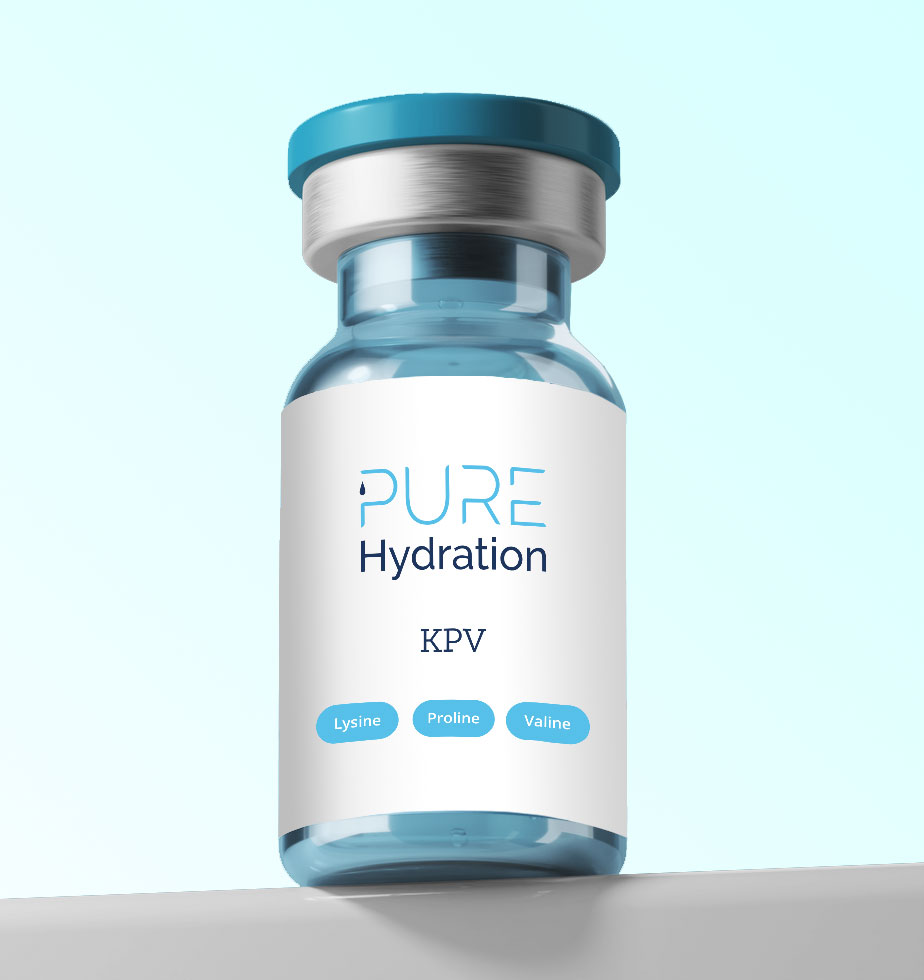
KPV is three amino acids long — lysine, proline, valine — which makes it one of the smallest therapeutic peptides in clinical use. It is the tail end of alpha-melanocyte-stimulating hormone, the fragment that carries the parent molecule’s anti-inflammatory activity without its other effects. What makes it interesting is where it acts. Rather than suppressing immune function broadly, KPV is associated with interrupting a specific inflammatory signaling pathway inside the cell. Its size also lets it reach tissue readily, which is why it appears in both gut-focused and skin-focused protocols, and why it is one of the four peptides in KLOW.

Benefits
Supports inflammation regulation in gut and skin tissue through targeted cellular signaling.
- Works through a specific inflammatory signaling pathway rather than broad immune suppression
- Studied in connection with gut lining integrity and digestive inflammation
- Associated with skin inflammation and wound healing support
- Very small molecular size supports tissue distribution
- Available standalone or inside the KLOW four-peptide blend
Safety Information
Generally well tolerated with a favorable side effect profile. Mild injection site irritation may occur. Not recommended during pregnancy or breastfeeding. Patients with autoimmune conditions or those taking immunomodulating medication should review the protocol with their provider before starting.
Regimen
4 or 8 weeks of injections Monday through Friday. Dosing guide: 5 days on, 2 days off.
How to Take
Subcutaneous injection near the lower abdomen or outer thigh. Use sterile technique. Rotate injection sites.
How It Works
KPV is the C-terminal tripeptide fragment of alpha-melanocyte-stimulating hormone (α-MSH). It is associated with inhibiting the NF-κB pathway — a master regulator that, once activated, moves into the cell nucleus and switches on the genes that produce inflammatory mediators. By interrupting that step, KPV is associated with reducing inflammatory output at the source rather than blocking downstream immune activity, which is the distinction between modulating inflammation and suppressing immunity. Its three-amino-acid size allows it to enter cells directly, and it is studied in both intestinal epithelial tissue and skin.
KPV has been studied primarily in preclinical models of intestinal and skin inflammation, where it consistently shows reduced inflammatory signaling through the NF-κB pathway. Its very small size has made it a candidate for oral and targeted-delivery research as well, since it can enter cells directly. What the research does not yet include is large controlled human trials — the evidence for KPV is mechanistic and preclinical, and human use rests on that foundation plus a favorable tolerability profile. The FDA’s Pharmacy Compounding Advisory Committee reviewed KPV in July 2026 for wound healing and inflammatory conditions and gave it a favorable recommendation for the 503A bulks list. That is a recommendation, not approval. Compounded KPV is not an FDA-approved product.
FAQs
What is KPV?
A three-amino-acid peptide — lysine, proline, valine — that is the tail end of alpha-melanocyte-stimulating hormone. It carries the parent hormone’s anti-inflammatory activity without its other effects.
How does KPV reduce inflammation without suppressing the immune system?
It is associated with blocking NF-κB, a signal that switches on inflammatory gene expression inside the cell. That interrupts inflammatory output at the source rather than suppressing immune activity broadly.
Why is KPV used for gut health?
Most KPV research has been in intestinal tissue, where it shows reduced inflammatory signaling in the gut lining. Its small size allows it to reach intestinal epithelial cells directly.
How is KPV dosed?
Monday through Friday, 5 days on and 2 days off, for 4 or 8 weeks. Subcutaneous injection near the lower abdomen or outer thigh.
Is KPV available through a compounding pharmacy?
The FDA’s advisory committee gave KPV a favorable recommendation in July 2026 for the 503A compounding list. It is prescribed by a licensed provider after consultation and prepared for individual patients. It is not an FDA-approved drug.
How to Use Your Peptides
Before you get started with your peptide protocol, we recommend reviewing our Injection Guide to ensure safe and effective use. This quick-reference document walks you through proper subcutaneous injection technique, storage tips, and other best practices.
Each protocol below includes recommended timing, injection instructions, safety notes, and how the peptides work in your body. As always, please follow your provider’s guidance, and please reach out with any questions!
Book a Consultation
More Like KPV

Not all patients qualify for all treatments – book a free consultation to find out what program is right for you.