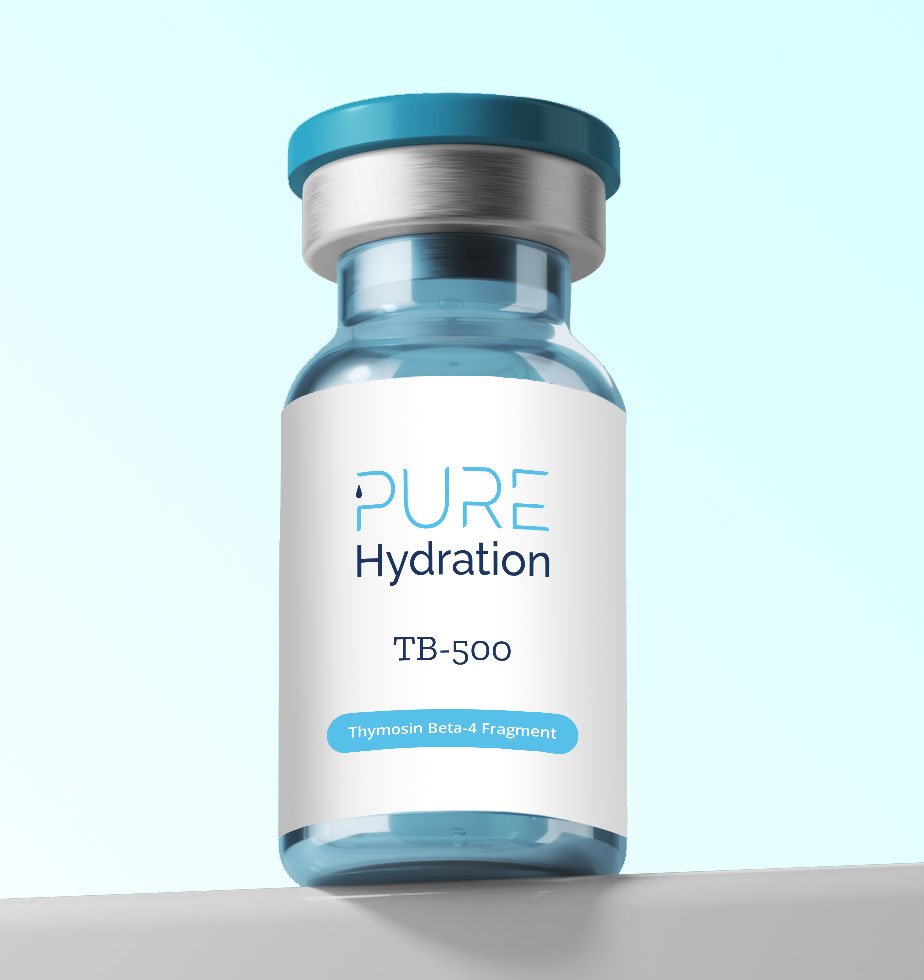
TB-500 is one half of Pure Wolverine Force, our most requested recovery protocol, and it works through a mechanism most recovery compounds do not touch. It is a synthetic fragment of thymosin beta-4, a protein present in nearly every human cell and found in especially high concentration at wound sites. Its central role involves actin — the structural protein that allows cells to physically move. Repair requires cells to migrate to the site of injury, and TB-500 is associated with that migration step, along with the formation of new blood vessels that supply a healing area. For patients working through a specific injury rather than a general recovery goal, the standalone protocol isolates that mechanism.

Benefits
Supports tissue repair, cellular migration, and recovery through actin regulation and new blood vessel formation.
- Associated with cell migration to sites of tissue repair
- Supports the formation of new blood vessels in healing tissue
- Studied in connection with muscle, tendon, and ligament recovery
- Works through a mechanism distinct from BPC-157, which is why the two are commonly paired
- Available standalone or inside Pure Wolverine Force and KLOW
Safety Information
Generally well tolerated. Minor irritation at the injection site may occur. Not recommended during pregnancy or breastfeeding. Because the mechanism involves new blood vessel formation, TB-500 is not appropriate for individuals with active cancer or a history of malignancy — discuss your full history with your provider. Always consult your provider before starting.
Regimen
6 or 12 weeks of injections Monday through Friday. Dosing guide: 5 days on, 2 days off.
How to Take
Subcutaneous injection near the lower abdomen or outer thigh. Use sterile technique. Rotate injection sites.
How It Works
TB-500 corresponds to the active region of thymosin beta-4, specifically the actin-binding domain. Actin is the cytoskeletal protein that gives cells structure and the ability to move, and cellular migration is a prerequisite for tissue repair — cells have to reach the damaged area before they can rebuild it. TB-500 is associated with upregulating that migration, alongside angiogenesis, the formation of new blood vessels that deliver oxygen and nutrients to healing tissue. It also shows association with downregulation of inflammatory signaling. Because BPC-157 works primarily through growth factor and blood vessel pathways, the two mechanisms overlap only partially, which is the rationale for combining them.
The parent protein, thymosin beta-4, has a substantial research history. It has been studied in controlled human trials for wound healing and in cardiac and corneal repair, and its role in actin regulation and cell migration is well established in cell biology. TB-500 is the synthetic fragment corresponding to the active region of that protein, and most of the evidence for the fragment specifically is preclinical — animal models of muscle, tendon, and ligament injury. Human data on TB-500 itself is limited. Its regulatory picture changed in 2026: the FDA removed it from the Category 2 list in April, and the Pharmacy Compounding Advisory Committee gave it a favorable recommendation in July for inclusion on the 503A bulks list. That is a recommendation, not approval — compounded TB-500 is not an FDA-approved product.
FAQs
What is TB-500?
A synthetic fragment of thymosin beta-4, a protein found in nearly every human cell and concentrated at wound sites. TB-500 corresponds to the region of that protein responsible for binding actin, the structural protein cells use to move.
How is TB-500 different from BPC-157?
Different mechanisms. BPC-157 works mainly through growth factor and blood vessel pathways. TB-500 works through actin regulation and cell migration. They overlap only partially, which is why they are paired in Pure Wolverine Force rather than used interchangeably.
Is TB-500 the same as thymosin beta-4?
TB-500 is a fragment — the active portion — of the full thymosin beta-4 protein. Most human research has been done on the full protein; research on the fragment is largely preclinical.
How is TB-500 dosed?
Monday through Friday, 5 days on and 2 days off, for 6 or 12 weeks. Subcutaneous injection near the lower abdomen or outer thigh.
Is TB-500 legal in 2026?
It is not an FDA-approved drug. In April 2026 the FDA removed it from the Category 2 restricted list, and in July 2026 the Pharmacy Compounding Advisory Committee recommended it for possible inclusion on the 503A compounding list. It is prescribed by a licensed provider and prepared by a compounding pharmacy for individual patients.
How to Use Your Peptides
Before you get started with your peptide protocol, we recommend reviewing our Injection Guide to ensure safe and effective use. This quick-reference document walks you through proper subcutaneous injection technique, storage tips, and other best practices.
Each protocol below includes recommended timing, injection instructions, safety notes, and how the peptides work in your body. As always, please follow your provider’s guidance, and please reach out with any questions!
Book a Consultation
More Like TB-500

Not all patients qualify for all treatments – book a free consultation to find out what program is right for you.