GHK-Cu: Everything You Need to Know About the Copper Peptide
Copper peptides have moved from quiet professional skincare into one of the most talked-about ingredients online, and GHK-Cu sits at the center of the conversation. You may have seen it framed as a way to rebuild collagen, repair skin at the cellular level, and even outperform retinol. Some of that is grounded in real science, and some of it is an exaggeration. This guide walks through what GHK-Cu actually is, what it can realistically do, and how to think about using it.
If you are interested in purchasing GHK-Cu, please visit our dedicated GHK-Cu page
What is GHK-Cu?
GHK-Cu is a naturally occurring copper-binding peptide found in human plasma, saliva, and urine. A peptide is simply a short chain of amino acids, the building blocks of proteins, and the GHK portion has a strong affinity for copper. When the two bind together, the resulting complex plays a role in tissue repair and cellular signaling throughout the body.
The reason it matters for skin is straightforward. GHK-Cu works as a carrier peptide, delivering copper to your cells and signaling fibroblasts to produce more collagen and elastin, the proteins that keep skin firm and resilient. Our natural levels of GHK-Cu decline as we age, which is exactly why researchers and formulators began exploring it as a topical ingredient for aging skin. Most products come as serums or creams, and many carry a faint blue tint that comes from the copper itself.
What the Evidence Actually Shows
This is where GHK-Cu separates itself from the crowd of trending ingredients: it is genuinely well-studied as a topical agent, with benefits documented in the scientific literature, particularly in wound care and tissue repair.
The proven topical benefits center on a few clear areas. GHK-Cu supports collagen and elastin production, which firms skin and softens fine lines over time. It aids wound healing and skin barrier repair. It has antioxidant properties that help protect and repair the skin from environmental damage like chronic sun exposure. And it has anti-inflammatory properties that help calm and soothe the skin. Notably, it can do much of this without the irritation that often comes with prescription tretinoin or over-the-counter retinol.
It is just as important to be clear about what GHK-Cu does not do. It does not replace retinoids for wrinkle reduction. It does not produce immediate tightening or lifting. It will not dramatically reverse deep wrinkles, and it is not a standalone anti-aging solution. The benefits are real, but they are gradual and subtle. The most useful way to think about copper peptides is as a supportive, restorative ingredient that improves long-term skin quality, not a quick fix.
Two claims in particular get overstated online. The first is hair growth: while GHK-Cu may calm scalp inflammation, there is little proven clinical evidence that it promotes hair regrowth, and gold-standard options work far better. The second is weight loss, for which there is essentially no credible evidence to support the claims. If you see GHK-Cu marketed for either, treat it with healthy skepticism.
How is GHK-Cu Different From Other Peptides?
“Peptide” has become a catch-all wellness term, and that lumping together is misleading because different peptides do genuinely different things. It helps to know the categories.
Signal peptides, such as Matrixyl, act as messengers that signal the skin to produce more collagen and primarily focus on anti-aging and wrinkle support. Carrier peptides are where GHK-Cu belong; rather than simply signaling, its main job is to deliver copper, a trace mineral essential to the enzymatic processes behind tissue repair and antioxidant defense. GHK-Cu is also sometimes described as growth-factor-like, because it influences genes involved in regeneration and inflammation, though it is not the same as prescription or injectable growth factors.
In short, many popular peptides are about short-term smoothing. GHK-Cu is about long-term skin quality and resilience.
Topical Versus Injectable: An Important Distinction
This is the single most important safety point to understand, because the two forms are not interchangeable.
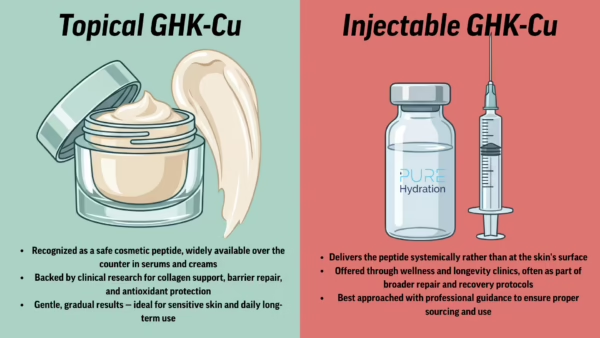
Topical GHK-Cu is recognized as a safe cosmetic peptide and is widely available over the counter, sometimes listed on ingredient labels as “copper tripeptide-1” or “copper tripeptide complex.” Licensed clinicians can also prescribe compounded pharmaceutical-grade topical versions. This is the form backed by clinical research, and it is the form this guide recommends.
Injectable GHK-Cu is a different story. It is restricted by the FDA and currently classified as a category 2 substance, meaning it has been flagged for possible safety risks and cannot be compounded for purchase by a pharmacy. You may see it offered by gray-market online retailers or by some wellness and longevity clinics operating off-label, often justified as being “for research purposes.” These are red flags. The evidence for systemic, injectable use is scant, and it is not currently approved as safe. The promising science around GHK-Cu lives almost entirely on the topical side.
How To Use GHK-Cu
Copper peptides are generally well tolerated, but they are not entirely risk-free. Possible side effects include skin irritation or redness, especially at higher concentrations; tingling in reactive skin types; and breakouts in acne-prone individuals. The most common mistake is overuse: copper is beneficial in small amounts, but excessive copper signaling may increase inflammation or interfere with other actives.
A few practical guidelines make a real difference. Using GHK-Cu once daily is plenty for most people. Avoid pairing it in the same routine with strong acids or high-strength vitamin C, since there is some concern these can reduce its effectiveness. And rather than layering it directly with retinoids, alternate them. A common and effective approach is to apply a GHK-Cu serum in the morning, under a moisturizer with broad-spectrum sun protection, and save retinol or vitamin C for the evening. If your skin becomes irritated or inflamed at any point, that is your signal to scale back or stop.
Who Is GHK-Cu For?
GHK-Cu tends to be a strong fit for anyone focused on long-term skin health and repair, people with a compromised or fragile skin barrier, those who cannot tolerate retinoids, and skin recovering from a procedure when a provider approves it. Because it firms and supports without irritating, it is an especially good option for sensitive skin.
It is less ideal for highly acne-prone skin, for anyone expecting dramatic wrinkle reduction, and for those already layering multiple strong actives without professional guidance. As with most things in skincare, it works best as part of a balanced routine rather than as the only step.
Complementary Ingredients
GHK-Cu plays well with proven treatments, and pairing it thoughtfully often beats relying on it alone. For collagen stimulation, retinoids remain the gold standard. For texture and tone, chemical exfoliants and in-office treatments like microneedling or laser resurfacing deliver more noticeable change. And for barrier repair, ingredients like ceramides, niacinamide, and glycerin work beautifully alongside copper peptides. You can even build a routine around all three pillars, retinol or vitamin C for collagen and antioxidant support, plus GHK-Cu for barrier and repair, as long as you space the actives out across the day rather than piling them on at once.
The Bottom Line
GHK-Cu is a scientifically grounded ingredient that genuinely supports skin repair, collagen production, barrier strength, and overall skin health. It improves skin quality over time, and it does so gently enough for people who can’t tolerate stronger actives. What it is not is a miracle. It won’t replace retinoids or in-office treatments, the injectable form isn’t safe or approved, and the hair and weight-loss claims don’t hold up. Used topically, thoughtfully, and consistently, it can be a valuable addition to your routine. If you’re unsure how to fit it in, a clinician or dermatologist can help you build a plan that actually works for your skin.
GHK-Cu Frequently Asked Questions
Is injectable GHK-Cu safe?
Injectable GHK-Cu is not currently approved as safe. The FDA classifies it as a category 2 substance, meaning it’s been flagged for possible safety risks and can’t be compounded by pharmacies for purchase. The clinical evidence for systemic, injectable use is scant. The well-studied, recognized-as-safe form of GHK-Cu is topical, which is what the research actually supports.
Is GHK-Cu FDA-approved?
Topical GHK-Cu is recognized as a safe cosmetic peptide and is widely available over the counter. The injectable form is a different story — it’s FDA-restricted as a category 2 substance and is not approved. If you see injectable GHK-Cu sold online or offered “for research purposes,” treat that as a red flag.
Where can I buy GHK-Cu?
You can buy GHK-Cu on our site: https://purehydrationspa.com/peptide/ghk-cu/ . Topical GHK-Cu is sold over the counter in serums and creams, sometimes listed on labels as “copper tripeptide-1” or “copper tripeptide complex.” Licensed clinicians can also prescribe compounded pharmaceutical-grade topical versions. Injectable GHK-Cu is typically available only through gray-market online retailers or physician-guided wellness clinics.
What does GHK-Cu actually do for skin?
GHK-Cu is a copper-binding peptide that signals your skin’s fibroblasts to produce more collagen and elastin, supporting firmness and helping soften fine lines over time. It also aids wound healing and skin barrier repair, offers antioxidant protection against environmental damage, and has anti-inflammatory, soothing properties — often without the irritation associated with retinoids.
Is GHK-Cu better than retinol?
No — they do different jobs. Retinoids remain the gold standard for wrinkle reduction and collagen stimulation. GHK-Cu won’t replace them, produce immediate tightening, or dramatically reverse deep wrinkles. Its strength is gradual, supportive improvement in long-term skin quality and barrier resilience, and it’s gentle enough for people who can’t tolerate retinoids.
Does GHK-Cu work for hair growth?
The evidence is weak. GHK-Cu may calm scalp inflammation, but there’s little proven clinical evidence that it promotes hair regrowth, and established treatments work far better. Be skeptical of products marketed primarily for hair regrowth.
How do I use GHK-Cu in my routine?
Once daily is plenty for most people. A common approach is to use a GHK-Cu serum in the morning under a broad-spectrum SPF moisturizer, saving retinol or vitamin C for the evening. Avoid pairing it in the same routine with strong acids or high-strength vitamin C, and alternate it with retinoids rather than layering them together.
Are there any side effects?
Topical GHK-Cu is generally well tolerated, but possible side effects include irritation or redness (especially at higher concentrations), tingling in reactive skin, and breakouts in acne-prone skin. The most common mistake is overuse — more copper isn’t better and may increase inflammation. If your skin becomes irritated, scale back or stop.
Who should use GHK-Cu?
It’s a strong fit for anyone focused on long-term skin health and repair, people with a compromised or fragile skin barrier, those who can’t tolerate retinoids, and sensitive skin in general. It’s less ideal for highly acne-prone skin, anyone expecting dramatic wrinkle reduction, or those already layering multiple strong actives without professional guidance.
This article is for informational purposes only and is not a substitute for direct medical advice from your physician or another qualified professional.